
Layering Necklaces Without Tangling: The Guide That Actually Works
Layering necklaces without tangling looks effortless - on some women and chaotic on others. Here's the exact necklace stacking system that stays put all day.
FASHION
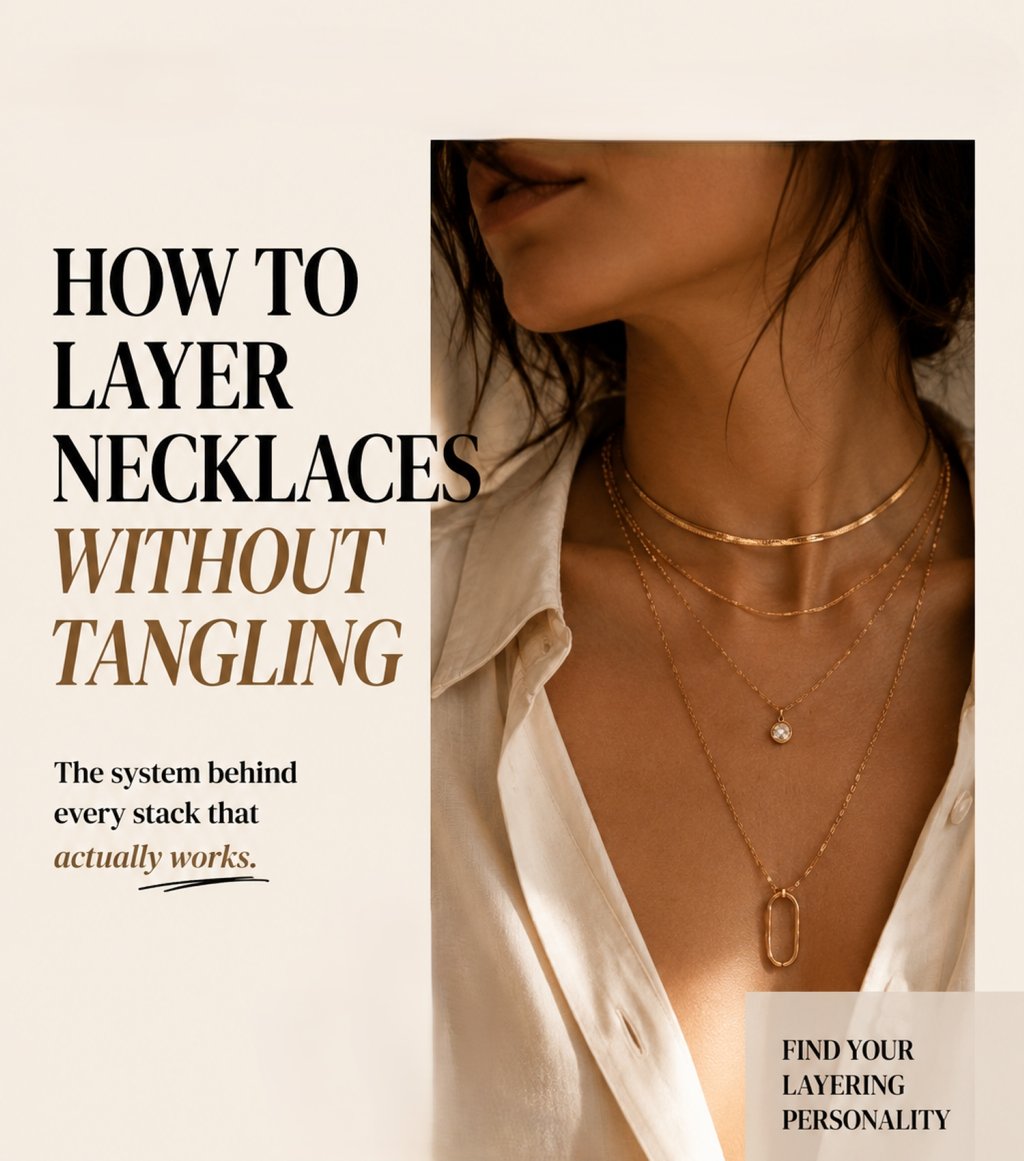
How to Layer Necklaces Without Tangling - The System Behind Every Stack That Actually Works
You've seen it. Someone has three necklaces sitting perfectly at different lengths, and none of them are fighting each other. They look effortless.
Then you get home, pull out your own necklaces, and somehow end up with a knot you need scissors to fix.Most people think they need better necklaces. They don't.
The secret behind how to layer necklaces without tangling isn't the jewelry itself. It's the spacing. Once you understand that, necklace layering becomes surprisingly simple.
Why Your Necklaces Keep Tangling (It's Not Bad Luck)
The real problem with most necklace layering isn't style-It's physics.
When two chains sit at the same length, they occupy the same space on your chest. They move together when you move, catching on links, pendants, and clasps along the way. What looked perfect in the mirror can turn into a tangled mess by lunchtime.
This is why how to layer necklaces comes down to one principle before anything else: each necklace needs its own space.
The best layered necklace looks aren't built with more pieces. They're built with better spacing.
The 3-Length Rule: Your Necklace Layering Guide
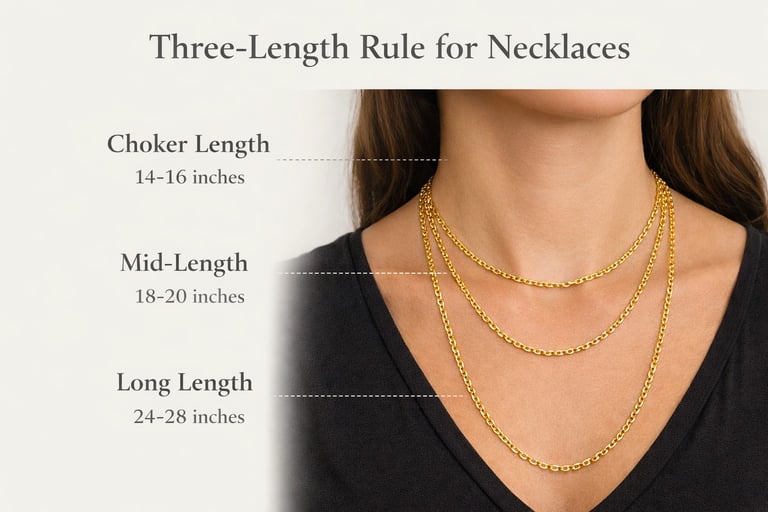
Every good necklace layering guide starts here. Three lengths, each sitting clearly apart:
Layer 1: The Choker or Collar (14–16 inches)
Sitting at or just above the collarbone, this layer acts as the foundation of your stack. A simple dainty gold necklace, a thin chain, or a delicate beaded piece works well here. Avoid anything too heavy.
Layer 2: The Mid Layer (18–20 inches)
This is where your pendant necklace lives. A small symbol, a stone, an initial, or anything with a focal point works well. This layer naturally draws the most attention because it sits near the center of your chest.
Layer 3: The Long Layer (24–28 inches)
The finishing layer. A longer chain, a layered silver necklace, or a bold gold layered necklace set works here. It adds balance and helps the stack feel complete.
When each necklace occupies its own length, the layers sit cleanly, look more intentional, and are far less likely to tangle.
[3-length explanation]
Example: Building a Stack in 30 Seconds. If you're unsure where to start, choose:
One 16-inch chain
One 18–20-inch pendant necklace
One 24-inch chain
Put them on in that order. If each piece sits in its own space without overlapping, your stack is already most of the way there.
Chain Types That Work Together (And The Ones That Don't)
While length helps prevent tangling, chain type determines how balanced and cohesive the stack looks.
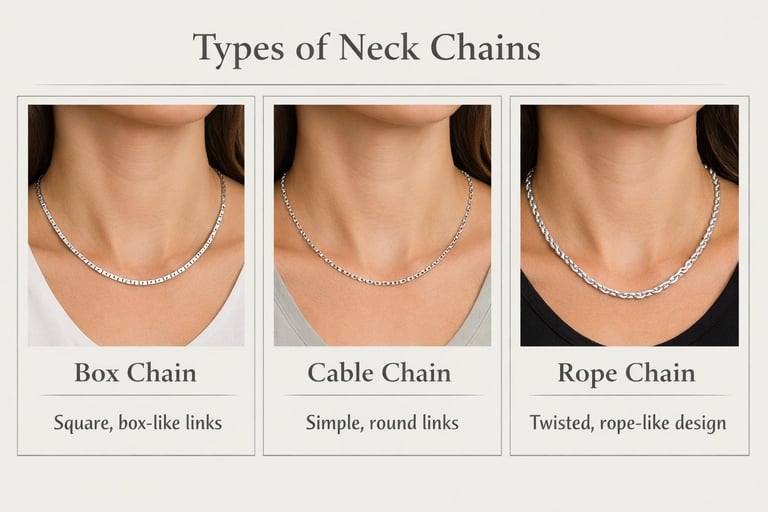
Thin chains layer cleanly. Box chains, cable chains, and fine rope chains stay flat, don't catch on each other, and sit quietly while other pieces do the work. These chain styles stay flat and move independently, making layered necklaces easier to wear throughout the day
If all your necklaces use similar chain styles, don't worry. Length separation matters far more than chain variation. Different chain types create visual contrast, but spacing is what prevents tangling.
Chunky chains generally need more space to work well in a layered stack. A thick paperclip chain or a bold link doesn't layer well in the middle; it crowds everything around it. Use chunky chains as your bottom layer only. Let them anchor the stack instead of fighting with it.
Mixed metals are fine. A dainty gold necklace at the top and a layered silver necklace in the middle can work beautifully. What matters is the weight and scale of the pieces balance each other, not that everything matches.
One practical tip for charm necklace layering specifically: If your charm is large, place it on the longest layer. A big charm in the middle tends to catch on the chains above it and can make the entire stack feel crowded.
The Boho Stack
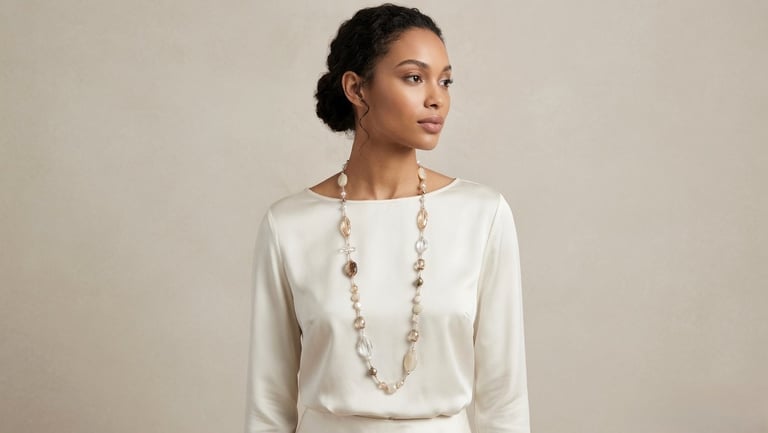
Beaded necklaces at mid-length + a longer coin pendant or natural stone chain. The texture contrast between the beads and the metal is what makes it interesting.f you're looking for beaded necklace outfit ideas, this combination pairs especially well with linen shirts, relaxed dresses, and oversized tees.
What Neckline Changes Everything
The same stack reads completely differently depending on what you're wearing. This is the part of every necklace layering guide that gets skipped, and it's why the same combination looks perfect on one outfit and wrong on another. The same idea applies to minimalist wardrobe essentials, where a small collection of versatile basics makes it easier for accessories to stand out.
V-neck:
A pendant necklace at 20 inches follows the neckline naturally. Layer a choker above it. The two pieces echo the V-shape, and everything sits where it should.
Crew Neck:
With a crew neck, longer necklaces usually work best. A 24-inch chain clears the neckline entirely, helping a layered necklace set gold look more balanced against a crew neck. Avoid chokers; here they sit right against the neckline and look crowded.
Layered necklaces can add personality to blazers, knitwear, and office basics without making a work wardrobe feel repetitive.
Off-Shoulder:
Shorter necklaces tend to work best with off-shoulder necklines. A choker or collar necklace sits above the neckline and does all the work. This is where cute necklaces for women, especially delicate chains and collar necklaces, tend to stand out the most.
Scoop Neck:
Scoop necklines are often the most forgiving option for stacked necklaces. The 3-length rule works particularly well here, allowing you to start with a choker and build downward with ease.
The 5 Pieces Worth Actually Buying
Most layering problems come from trying to combine random necklaces that were never designed to sit together. If you're building a stack from scratch, start with the five pieces below and use the 3-length rule as your guide.
The Statement Stack
A thin choker + a charm necklace at 18 inches + a bold layered chain at 24 inches. This one takes up space intentionally. Charm necklace layering works best when the charm sits alone at the mid-layer, with nothing competing above or below it. Keep the neckline simple so the necklaces remain the focal point.
The Everyday Stack
A plain chain at choker length paired with a simple pendant creates an easy everyday stack. This gold layered necklace set combination works with almost any outfit and requires very little thought to style.
The Minimal Stack
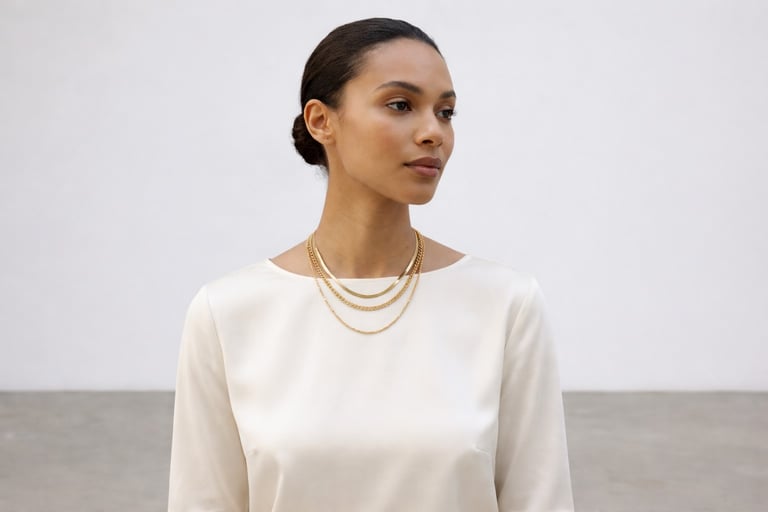
The Minimal Stack combines a plain dainty gold necklace at choker length with a thin pendant necklace at 20 inches. With just two pieces, it pairs easily with a white shirt, a blazer, or a simple dress. The result is polished, versatile, and easy to wear every day.
A simple necklace stack often looks more polished than multiple trend-driven pieces, a principle that also applies when learning how to look expensive on a budget.
3. A simple pendant necklace (18–20 inches)
This is the piece you'll reach for most often. Choose a pendant you genuinely love, whether that's a small stone, an initial, or a meaningful symbol.
1. A plain, dainty gold chain (16 inches)
This is the foundation of most necklace combinations and works well on its own or as part of a layered stack.
2. Beaded necklaces in natural tones
They add texture without feeling heavy and work particularly well in both boho and everyday combinations.
5. A charm necklace
Charm necklace layering tends to work best when the focus stays on one meaningful charm rather than several competing elements.
4. A chunky gold chain
It adds contrast and structure to a layered stack while also working well as a standalone statement piece.


4 Layered Necklace Ideas That Actually Work
These aren't mood board combinations. These are layered necklace ideas built around the 3-length rule, making them easy to recreate with pieces you may already own.












SHOP THE LOOK
SHOP THE LOOK

FAQ
How many necklaces should you layer at once?
Three is the sweet spot. One choker, one mid-length pendant, one longer chain. Each sits in its own zone, and nothing competes. More than three, and it starts looking busy rather than intentional.
How do you keep layered necklaces from tangling?
The 3-length rule solves most of it. When each necklace sits at a clearly different length (14-16 inches, 18-20 inches, and 24-28 inches), they don't share the same space and have nothing to catch on. Thin chains also tangle less than chunky ones.
What is the best chain type for layering?
Thin chains, boxes, cables, or fine rope layers are the cleanest. They stay flat, don't catch on each other, and let the pendants do the work. Save chunky chains for the bottom layer only.
Can you mix gold and silver necklaces?
Yes, mixed metals stopped being a style mistake a long time ago. What matters is that the weight and scale of the piece’s balance each other, not that they match.
What is the best necklace to start a layered stack?
A plain, dainty gold chain at 16 inches. It works as the base of almost every combination and costs less than most single statement pieces. [→ Shop on Amazon]
This post contains affiliate links. If you purchase through them, Veynora may earn a small commission at no extra cost to you. We only link to pieces we'd actually recommend.
New To Veynora
Subscribe for thoughtful guides on building a life that actually feels like yours
© 2026 VEYNORA
Veynora shares minimal fashion inspiration, home decor ideas, and wellness habits for intentional living.
WRITE FOR US